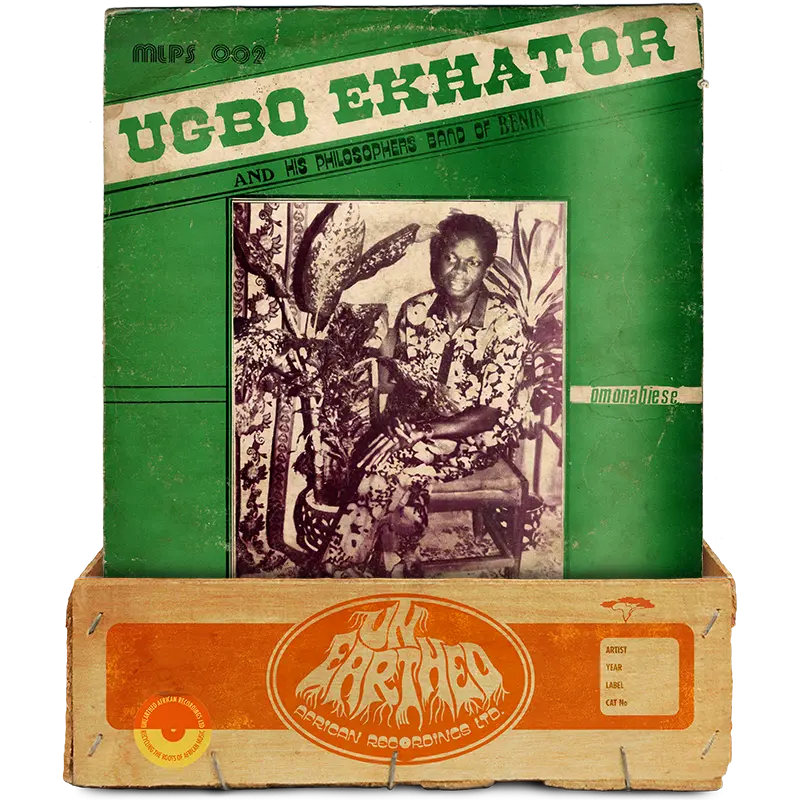
Ugbo and His Philosophers Band of Benin were a prominent force in Nigeria’s highlife tradition, emerging from the culturally rich Benin region. Under the leadership of the gifted musician and bandleader Ugbo Ekhator, the band carved out a distinctive identity that skillfully blended the deep-rooted musical heritage of the Edo people with the evolving sound of modern highlife. Their work stood as both a celebration of their origins and an exploration of new sonic possibilities.
The group made their recording debut in 1979 with two foundational albums, Ugbo and His Melody Dance Band and Ugbo Dance Band. These early works marked their formal entry into Nigeria’s flourishing music circuit and set the stage for their later achievements. By 1981, with the release of Ugbo and His Philosophers of Urhonigbe, the band had begun refining their sound, weaving cultural storytelling with increasingly complex instrumentation.
Their 1982 album Iyesogie represented a turning point, capturing their most distinctive fusion yet of traditional Edo music and contemporary highlife aesthetics. The title track, Iyesogie, alongside Irioya, stood out for their hypnotic rhythms, lyrical depth, and elegant use of percussion and melody—qualities that came to define the band’s signature style.
In 1983, Ugbo and His Philosophers Band of Benin entered one of their most prolific creative phases. They released several notable projects that year, including their eponymous album Ugbo and His Philosophers Dance Band of Benin, as well as Ugbo and His Philosophers Band, Afona, and Okpenikezozo. These recordings reflected the band’s peak craftsmanship, blending the earthy pulse of Edo percussion with intricate guitar harmonies and layered brass sections, creating a lush, deeply textured highlife soundscape.
The band’s commitment to musical excellence carried on through the 1990s, evidenced by the release of Obo in 1990, which reaffirmed their enduring influence and creative vigor. Their broader catalog includes celebrated records like Omonabiese, featuring memorable tracks such as Semwenrae, Omwenmwin Ghare, and Ighokpoya, each a testament to their ability to merge Edo rhythmic traditions with refined highlife orchestration. Other standout releases include Ugbo Ekhator & His Philosophers Dance Band of Benin, Uwakiemen, Ovbanghe Gbevbenomo, and Ewu-Ede.
Through decades of artistic evolution, Ugbo and His Philosophers Band of Benin preserved the heart of Edo music while infusing it with the sophistication and dynamism of highlife. Their legacy remains woven into the fabric of Nigerian music history, a powerful reminder of how tradition and innovation can coexist to produce something timeless and profoundly influential.
The group made their recording debut in 1979 with two foundational albums, Ugbo and His Melody Dance Band and Ugbo Dance Band. These early works marked their formal entry into Nigeria’s flourishing music circuit and set the stage for their later achievements. By 1981, with the release of Ugbo and His Philosophers of Urhonigbe, the band had begun refining their sound, weaving cultural storytelling with increasingly complex instrumentation.
Their 1982 album Iyesogie represented a turning point, capturing their most distinctive fusion yet of traditional Edo music and contemporary highlife aesthetics. The title track, Iyesogie, alongside Irioya, stood out for their hypnotic rhythms, lyrical depth, and elegant use of percussion and melody—qualities that came to define the band’s signature style.
In 1983, Ugbo and His Philosophers Band of Benin entered one of their most prolific creative phases. They released several notable projects that year, including their eponymous album Ugbo and His Philosophers Dance Band of Benin, as well as Ugbo and His Philosophers Band, Afona, and Okpenikezozo. These recordings reflected the band’s peak craftsmanship, blending the earthy pulse of Edo percussion with intricate guitar harmonies and layered brass sections, creating a lush, deeply textured highlife soundscape.
The band’s commitment to musical excellence carried on through the 1990s, evidenced by the release of Obo in 1990, which reaffirmed their enduring influence and creative vigor. Their broader catalog includes celebrated records like Omonabiese, featuring memorable tracks such as Semwenrae, Omwenmwin Ghare, and Ighokpoya, each a testament to their ability to merge Edo rhythmic traditions with refined highlife orchestration. Other standout releases include Ugbo Ekhator & His Philosophers Dance Band of Benin, Uwakiemen, Ovbanghe Gbevbenomo, and Ewu-Ede.
Through decades of artistic evolution, Ugbo and His Philosophers Band of Benin preserved the heart of Edo music while infusing it with the sophistication and dynamism of highlife. Their legacy remains woven into the fabric of Nigerian music history, a powerful reminder of how tradition and innovation can coexist to produce something timeless and profoundly influential.