


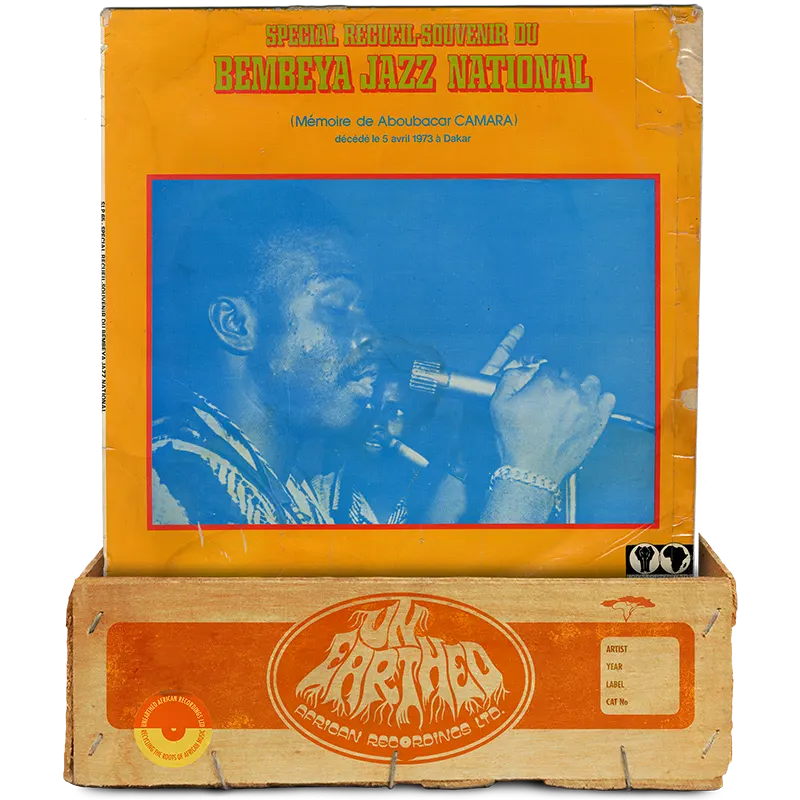
Special Recueil-Souvenir Du Bembeya Jazz National
Bembeya Jazz National
One of Guinea’s most important musical exports and a mainstay of West African popular music is Bembeya Jazz National, formerly known as Orchestre de Beyla. With the assistance of local governor Emile Condé, the band was established in 1961 in the southern Guinean town of Beyla to act as the “”orchestre moderne”” of the area during the time of transition that followed Guinea’s independence in 1958.
President Ahmed Sékou Touré’s cultural policy of “authenticité” which promoted national pride and saw all private dance orchestras disbanded in favour of state-sponsored regional bands, coincided with the group’s founding. This ground-breaking method of music patronage would play a key role in forming Guinea’s musical scene and making Bembeya Jazz a national treasure.
Leo Sarkisian recorded the band’s early recordings for the Hollywood-based Tempo International label in 1961, with their first album titled “Sons nouveaux d’une nation nouvelle’, which included songs like “Yarabi,” “Lele,” “Wassoulou,” and “Maniamba.” The original lineup included Sékou Camara and Achken Kaba in the brass section on trumpets, Sékou “Diamond Fingers” Diabaté on guitar (his youngest member at the time), Hamidou Diaouné on bass, and Mory “Mangala” Condé on drums.
The name “Bembeya” is drawn from a local river and reflects the band’s strong connection to its roots. However, their sound would transcend regional limits as they grew from humble beginnings to a sophisticated band that expertly mixed traditional Manding music with modern influences such as Cuban rhythms, jazz, and Afropop styles.
The inclusion of lead vocalist Aboubacar Demba Camara and singer Salifou Kaba hastened the band’s rise to prominence on a national scale. Demba Camara, who had previously worked as a carpenter with Kaba, contributed tremendous singing skills that would define Bembeya’s golden age. The duo’s relationship began when they were spotted singing Cuban songs in their carpentry workshop in Beyla, resulting in their recruitment by guitarist Sékou Diabaté who had heard them performing while working.
Kaba, born in Kankan in 1943, was influenced by Cuban records brought back by his brother, who had studied in Havana. This Cuban influence became an intrinsic part of Bembeya’s sound, and the band travelled to Cuba in 1964 to perform for Cuban superstar Abelardo Barrosa, who was surprised to learn that his music was known and adored throughout Africa.
Bembeya Jazz National, which specialises in modern arrangements of Manding classic compositions, has achieved exceptional success in national competitions, receiving first place at arts festivals in 1964 and 1965 before being named “National Orchestra” in 1966. This categorisation propelled them from a regional federal band to full professional status, complete with government wages and daily rehearsal schedules that allowed them to concentrate solely on music.
Bembeya, Guinea’s national orchestra, performed nightly in Conakry save on Fridays (for neighbourhood community gatherings) and Mondays (for relaxation), providing the music to the country’s post-independence cultural revival. Their multilingual approach – singing in Pulaar, Guerzé, Soussou, and numerous forest dialects such as Kono – reflected their status as true national ambassadors of Guinean music.
Their most famous work, “”Regard Sur Le Passé”” (1968), was their most ambitious artistic achievement: a musical monument to Samory Touré, who established a Mande state in northern Guinea in 1870 and became a nationalist symbol after independence. This CD showcased Bembeya’s ability to turn historical narratives into captivating musical stories.
The band’s huge hit list includes timeless songs including “Mami Wata”, “Armée Guinéenne’, “Sabou”, “Gbapie”, “Akukuwe”, “Lefa”, and “Bembeya International”. These works, many of which band members arranged from traditional sources, demonstrated their ability to modernise folk material while retaining its cultural core. Songs like “Lefa” were inspired by Wassoulou traditional festivities, while “Akukuwe” reworked a moonlit children’s song into an elegant jazz arrangement.
On April 5, 1973, lead vocalist Aboubacar Demba Camara died in a car accident while on his way to a concert in Dakar, Senegal. The loss saddened the band and signalled the end of their most successful period. In response, they formed “Trio Ambiance Bazoka,” with Salifou Kaba and new vocalists Nagna Mory Kouyaté (their first griot singer) and Moussa Touré, but the trio never regained its former charm.
Despite this setback, Bembeya proceeded to travel extensively throughout Africa, Europe, and North America, including a notable performance at the FESTAC festival in Nigeria in 1977, where they met Fela Kuti and Bob Marley. These international ties helped them gain a name beyond Guinea’s borders and inspired global admiration for West African music. The band performed songs entirely on Guinea’s state-owned Syliphone label until 1974, when their final album was published in 1987. Following the murder of President Sékou Touré, the new military government abandoned assistance for the national orchestras, leaving Bembeya to struggle as an autonomous group operating their own club venue with decliningresources.
After years of inactivity, Bembeya Jazz revived in the late 1990s and regained international recognition in 2002 when they performed at the Musiques Métisses d’Angoulême world music festival in France. This resulted in their first new recording in fourteen years, a revised compilation of their biggest songs that brought their iconic sound to a new generation of world music fans.The Diabaté guitar family, led by Sékou “Diamond Fingers” Diabaté and his relatives, continues to impact Guinean music, ensuring the band’s legacy lives on. Their biography was portrayed in the 2007 film “Sur les traces du Bembeya Jazz” ensuring their pioneering contribution in African popular music is still recognised.
Bembeya Jazz National’s influence stretches far beyond their albums; they symbolise a successful marriage of traditional African musical ideals with modern instrumentation and outside influences, establishing a pattern for other African bands to follow. Their ability to turn folk melodies into sophisticated arrangements while retaining cultural authenticity cemented their status as one of Africa’s most prominent musical ambassadors and living representations of Guinea’s rich musical legacy.

Artist:
Bembeya Jazz National
Original Release Year:
22/03/2024
Genre(s):
Afro Pop
Subgenre(s):
African Music
Release Country:
Guinea
Artist Country:
Ghana
Language(s):
Maninka, Susu
Producer(s):
Composer(s):
Youssoff Bah / Sekou Bembeya Diabate / Syliart
Publisher(s):
Editions Syliphone Conakry
track listings
-
Mossogbe
7:06
Please note that preview tracks are limited to 30 seconds. To listen to the album in full, click here
-
Beni Barale
3:48
Please note that preview tracks are limited to 30 seconds. To listen to the album in full, click here
-
La Guinée
4:06
Please note that preview tracks are limited to 30 seconds. To listen to the album in full, click here
-
Dagna
4:02
Please note that preview tracks are limited to 30 seconds. To listen to the album in full, click here
-
Fatoumata
3:48
Please note that preview tracks are limited to 30 seconds. To listen to the album in full, click here
-
Boiro
3:59
Please note that preview tracks are limited to 30 seconds. To listen to the album in full, click here
-
Ballake
8:00
Please note that preview tracks are limited to 30 seconds. To listen to the album in full, click here
-
Alla Lake
4:02
Please note that preview tracks are limited to 30 seconds. To listen to the album in full, click here
-
Waraba
6:21
Please note that preview tracks are limited to 30 seconds. To listen to the album in full, click here
-
N'borin
3:29
Please note that preview tracks are limited to 30 seconds. To listen to the album in full, click here
-
Doni Doni
4:26
Please note that preview tracks are limited to 30 seconds. To listen to the album in full, click here


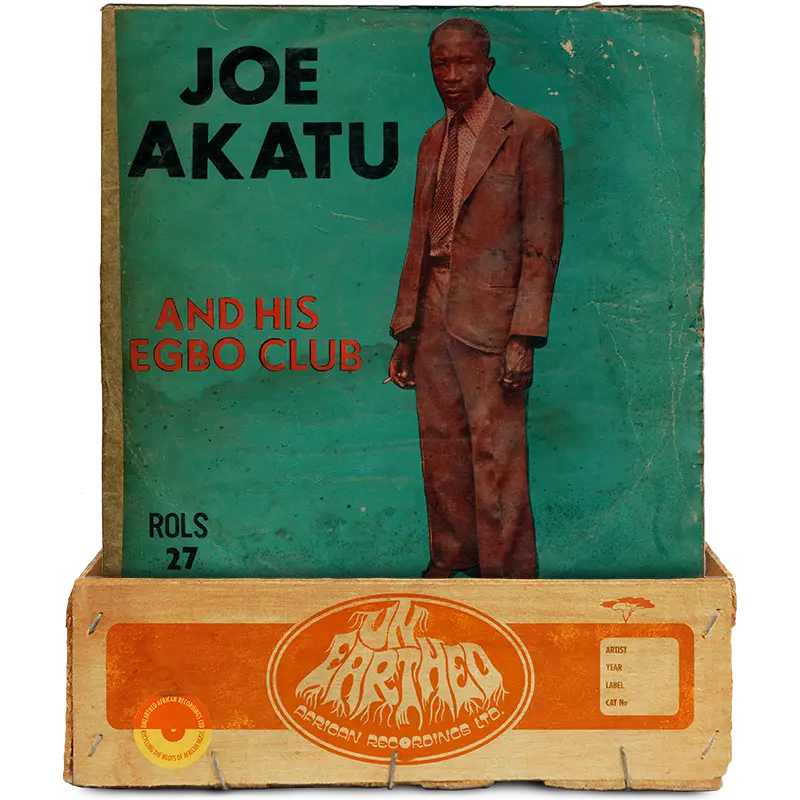
Dele Sosimi’s Pick Of The Month
“Aja” by Joe Akatu and his Egbo Band
Originally released in 1979 and remains a cornerstone of traditional and folk music from the Idoma-speaking region of Nigeria.