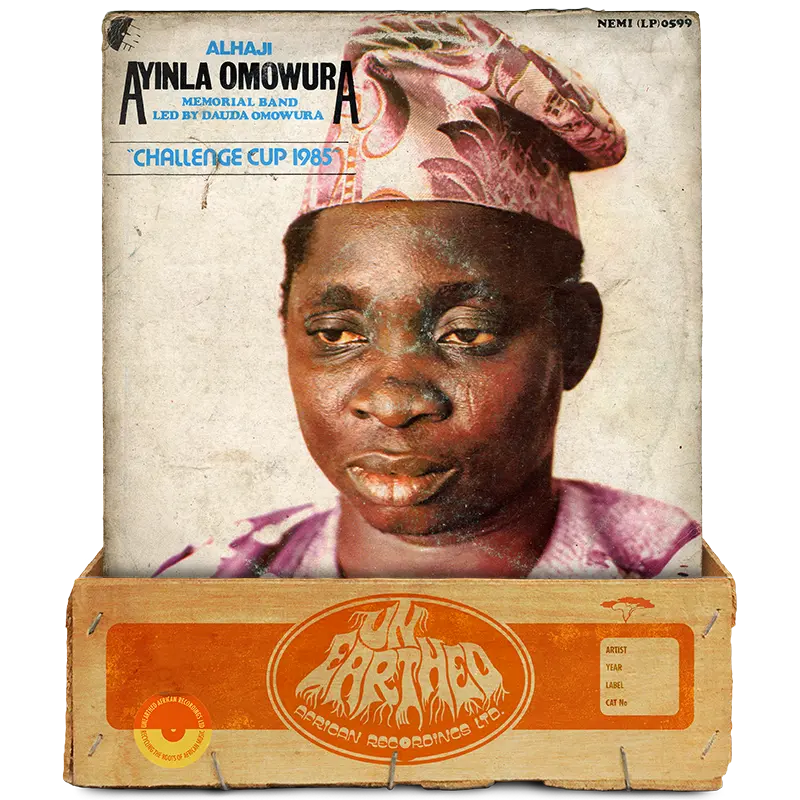
Born in 1933 in Itoko, Abeokuta, Àyìnlá Waidi Yusuf, also called Àyìnlá Ọmọwúrà, was the son of a blacksmith. Because of his boisterous behaviour as a child, the tagline “Ọmọwúrà” was coined and was derived from his mother’s name, Wuramotu. He would be recognised by witnesses yelling “it is Àyìnlá Ọmọwúrà,” which translates to “Son of Wura.”
Being a part of the Olalomi band in the 1950s marked the beginning of his musical career and contributed to the development of his skill in Abeokuta. But in the 1970s, he made the crucial choice to join drummer Adewole Alao Oniluola’s band after performing with him on multiple occasions while still with the Olalomi Group. With Àyìnlá as the lead singer, this collaboration gave rise to “Alhaji Àyìnlá and His Apala Group” under the EMI Record Label Nigeria.
Àyìnlá was well known for transforming Apala music, a Nigerian style that combined Islamic and traditional African music. As intriguing to watch as his voice was to hear, his detailed messages, danceable mellifluous incantations, metaphorical lyrics, adages, and electrifying dance routines were what set him apart, in addition to his unique Egba singing tone.
Love, loss, death, hardships, education, women’s issues, and political criticism were among the many themes he addressed in his music. His musical feuds with his peers, which included diss tracks that were ingrained in Apala culture, were especially well-known. From promoting education despite his own lack of formal education to making commentary on women’s behaviour, skin bleaching, and political governance, his songs frequently tackled societal concerns.
The songs “Ọmọ afi ẹ̀kọ́ ṣ’ọ̀fọ̀,” “Panṣágà rántí ọjọ́ ọ̀la,” and “Ẹ̀yin Òṣèlú Wa,” which address prostitution and provide political commentary on civilian vs military government, are among his most well-known songs. Additionally, he recorded “Ẹ fara mọ́’mobọ́lájí,” which endorsed the policies of Brigadier Mobolaji Johnson in Lagos State.
Over the course of his career, Àyìnlá recorded 22 albums, each of which sold at least 50,000 copies according to EMI. The moniker “Alhaji Costly,” which reflected his prominence and influence in the Nigerian music scene, was given to him because of his extravagant appearances and extravagant lifestyle.
On May 6, 1980, Àyìnlá Ọmọwúrà’s life ended tragically when his manager and buddy Bayewu viciously stabbed him in the head with a beer cup during a bar fight. His legacy as an Apala music pioneer who entertained audiences while addressing societal issues endures in Nigerian music history despite his untimely death.