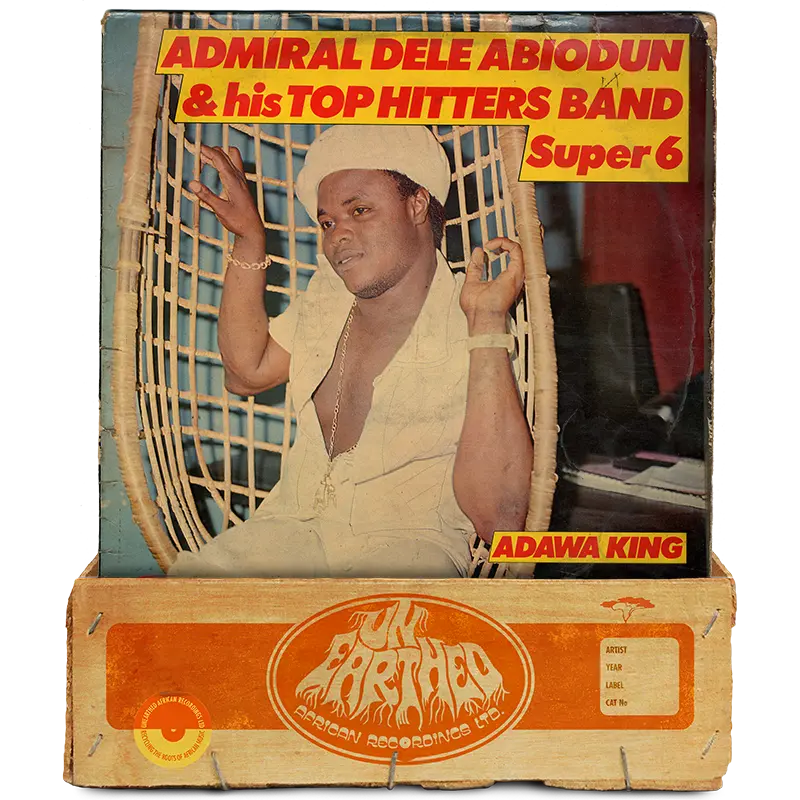
Admiral Dele Abiodun was a well-known Nigerian juju musician and bandleader who was born Prince Cyril Bamidele Abiodun Alele on March 23, 1948, in Ijebu Ode, Ogun State. He was raised in Sobe, a historic town near the border of Ondo and Edo States, by a teacher who went on to become a community leader. Before enrolling at Adeola Odutola College, Abiodun completed his elementary schooling at Ijebu Ode, but his love of music overtook all else. He dropped out of school as a teenager to devote himself entirely to music.
Abiodun relocated to Ghana and studied music in Accra after being influenced by the Ghanaian highlife wave during Kwame Nkrumah’s cultural revolution. He developed his talents and took in a variety of inspirations while working and performing as a bass guitarist with multiple highlife bands. His sound was formed by this time in Ghana, which also provided him with the musical self-assurance to pursue solo endeavours.
He formed his first band, Sweet Abbey and the Seven Brothers, after returning to Nigeria in 1969. This band then changed its name to Admiral Dele Abiodun & His Top Hitters Band. Additionally, he invented a brand-new musical genre known as Adawa, which translates to “Independent Being” and combines highlife, Afrobeat, and juju. He started to establish a distinctive place for himself in the flourishing Nigerian juju industry with this invention.
His breakthrough came in 1974 when the Olumo label issued the smash tune Kini Mo Ko Soke Yi O. Abiodun set himself apart from his contemporaries with the song’s usage of the Hawaiian steel guitar, an instrument he popularised in juju music. He became one of Nigeria’s best bandleaders thanks to his careful arrangements, powerful voice, and audacious experimentation.
With albums like Adawa Sounds Super 2 (1975), Adawa King (1977), Elemu Nget On (1978), The Beginning of a New Era (1981), Ma Se’Ke (1983), and Confrontation (1985), Admiral Dele Abiodun and his band rose to fame. His foreign trips, especially the historic one to the United States in 1978, broadened his appeal beyond Nigeria and popularised juju music throughout the world.
Juju music was forever changed by Admiral Dele Abiodun & His Top Hitters International, who were renowned for fusing traditional Yoruba rhythms with contemporary Western elements. His fashion sense was audacious, progressive, and firmly anchored in cultural pride.
The legacy of Admiral Dele Abiodun is his ability to modenise juju music while preserving its essential components. His name will always play a significant role in Nigerian music history thanks to his invention of the Adawa style and his collection of timeless hits.